Audi Q5 (₹ 4.3 - 4.6 Crore)
DRLs, or daytime running lights, have been added to the Q5. The headlamp cluster is altered thus, and yes although a complete LED cluster is standard, the matrix LEDs may be selected as an optional extra. The car's ground clearance has also been improved thanks to the use of a new lighter sill insert. A new diffuser and tailpipes, as well as a reworked tailgate and brand new OLED taillights (which have their own history, see below), giving the car a more athletic rear end. The automobile seems wider and larger in general, despite the fact that it is not. There are two new colours: ultra blue and district green, which you can view here. It will be launching in this month as earlier said.
The car has a more athletic rear end thanks to a reworked tailgate, fresh new OLED taillights, a new diffuser, and tailpipes. Now those OLED taillights. Organic light emitting diodes, or OLEDs, are better to traditional LEDs in that they can illuminate a wider area more evenly. They're used in the redesigned taillights, and Audi has gone one step further by offering three distinct rear light signatures or patterns to select from. When the automobile is unlocked or switched off, each signature has its own unique animation, which is referred to as the "going home and coming home" light scenario.
Each of the three styles has a separate animation (meaning the manner in which the taillight cluster lights up or shuts down), which is a significant first in the industry. Audi was also the first to have a start-up or shut-down animation, but this takes it a step further. Aside from the three design options available to customers, there is a fourth trademark taillight pattern that is activated by default while the car is in dynamic mode (using the drive select drive modes programme). The OLED taillights have another trick up their sleeves, and it has to do with safety. When the automobile is stopped and sensors detect another vehicle approaching from behind, all of the OLED segments in the cluster light up.
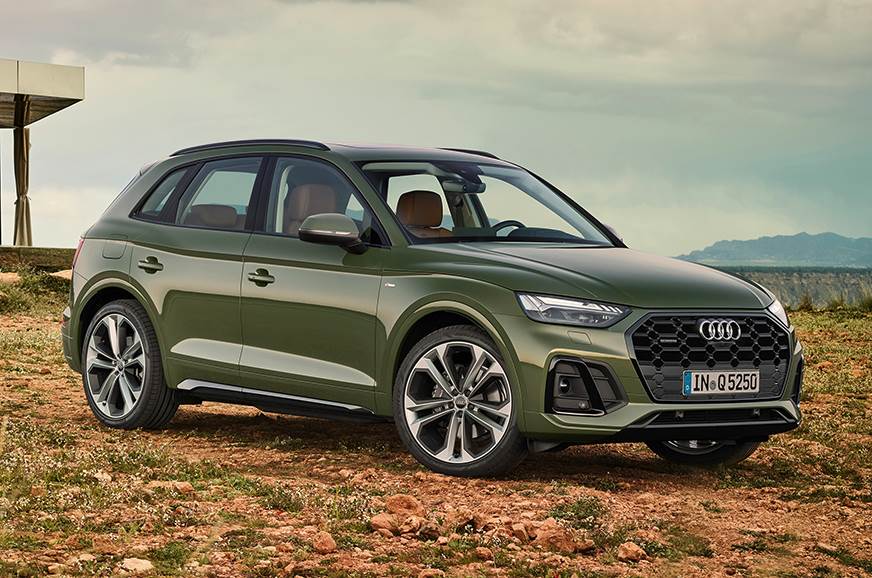
While it's unclear how much of this will be available on the Indian model, considering that the most of the customizations would be software-related, it shouldn't be too tough. I say this knowing that the Q5 will most likely continue to be manufactured locally at the VW Group's facility in Aurangabad. The biggest difference between the previous car and this one – for India – is that it will no longer be available as a diesel. Only the TFSI engines will be used in place of the TDI engines. In reality, Audi's HQ team indicated in a presentation to a small number of us from India and the Middle East that the region's three engines will be two 4-cylinder petrol engines and one 6-cylinder.
These include the 2.0 TFSI quattro with 200 Brake horsepower and 350 Nm, as well as a 260 Brake horsepower version of the same engine. The peak torque of the second generation is 370 Nm. Both have a 12-volt mild hybrid system with brake energy recovery and a 7-speed dual clutch S-Tronic transmission. The V6 engine is used in the Audi SQ5 TFSI quattro. The 3-litre engine produces 348 horsepower and 500 Nm, and all of that torque is sent to the wheels via an 8-Speed torque converter tiptronic. A 48-volt mild hybrid EV system is standard on the V6. While both engines feature quattro, the 4-cylinders employ the ultra technology, which is lighter (and less expensive), and the SQ5 gets the thoroughbred quattro (with a torsen mid-differential).
Comments
Post a Comment